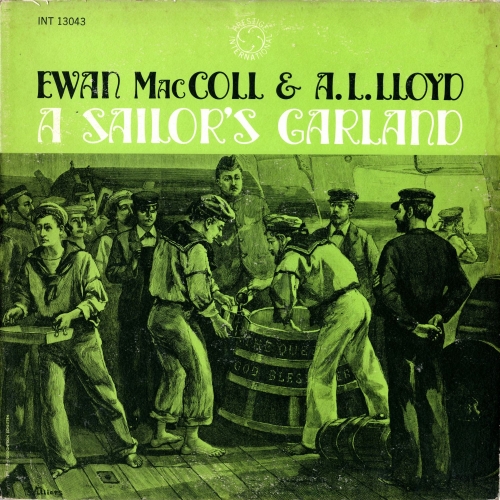
Ewan MacColl & A.
Lloyd, A Sailor's Garland,
LP US Prestige Records 1962 - INT13043
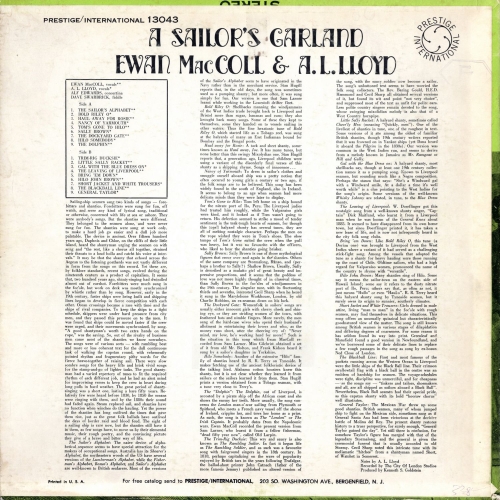
Sailing-ship seamen sang two
kinds of songs — forebitters and shanties. Forebitters were
sung for fun, off watch, and were any kind of lyrical song, traditional
or otherwise, concerned with life at sea or ashore. They were anybody's
songs. But the shanties were different. They belonged to the seamen
alone, and were never sung for fun. The shanties were sung at work
only, to make a hard job go easier and a dull job more palatable. The
device is ancient. The great period of shantysinging was a short one,
lasting a bare fifty years. Relatively few were heard before 1830, by
1850 the oceans were ringing with them, and by the 1880s their sound
had faded again. Steam replaced sail, and shanties have no function
when winches do the hauling. Yet the power of the shanties has long
outlived the times that gave them rise, just as the great folk ballads
have outlived the days of border raid and blood feud. The sight of a
sailing ship is rare now, but the shanties still have it in them, as
few songs have, to move us by their elemental music, their rough
poetry, and the convincing picture they give of a brave and bitter way
of life. Recorded by The City of London Studios
Produced by Kenneth S. Goldstein
I marinai dei velieri intonavano due tipi di canti: i "forebitters" e
gli "shanties". I "forebitters" venivano eseguiti per puro svago,
durante i momenti di riposo; si trattava di brani di natura lirica
— tradizionali o meno — che avevano per tema la
vita in mare o a terra. Erano canti che chiunque poteva intonare. Gli
"shanties", invece, erano tutt'altra cosa: appartenevano esclusivamente
ai marinai e non venivano mai cantati per divertimento. Si eseguivano
soltanto durante il lavoro, per rendere meno gravoso un compito arduo o
più sopportabile un'attività monotona. Si tratta
di una pratica antichissima. L'epoca d'oro degli "shanties" fu
piuttosto breve, circoscritta ad appena cinquant'anni: se ne sentivano
relativamente pochi prima del 1830, ma verso il 1850 gli oceani ne
risuonavano ovunque, per poi tornare nel silenzio già a
partire dagli anni ottanta dell'Ottocento. Il vapore
sostituì la vela e, quando furono i verricelli a farsi
carico del lavoro di traino, gli "shanties" persero la loro funzione.
Eppure, la forza di questi canti è sopravvissuta a lungo
all'epoca che li ha generati, proprio come le grandi ballate popolari
sono sopravvissute ai tempi delle incursioni di frontiera e delle faide
sanguinose. Oggi è raro imbattersi in un veliero, ma gli
"shanties" conservano ancora — come pochi altri brani
— la capacità di emozionarci grazie alla loro
musica essenziale, alla loro poesia ruvida e all'efficace ritratto che
offrono di uno stile di vita coraggioso e, al contempo, durissimo.
Registrato presso i City of London Studios. Prodotto da Kenneth S.
Goldstein.
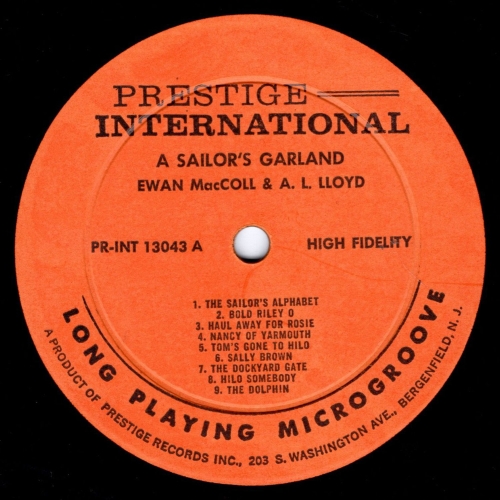
Tracks
Side One:
The Sailor's Alphabet
- Bold Riley O
- Haul Away for Rosie -
Nancy of Yarmouth
- Tom's Gone to Hilo
- Sally Brown
- The Dockyard Gate
- Hilo Somebody
- The Dolphin
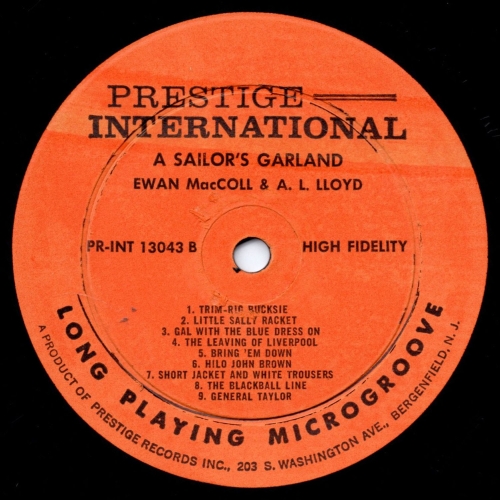
- Tracks Side Two:
The Trim-Rig Ducksie (The Rambling Sailor)
- Little Sally Racket
- Gal With the Blue Dress on
- The Leaving of Liverpool -
Bring 'Em Down
- Hilo John Brown
- Short Jacket and White Trousers
- The Black Ball Line
- General Taylor
.
Musicians: Ewan MacColl: Vocals [1, 3, 5, 7, 9, 11, 12, 13, 15 & 17]
A. L. Lloyd:Vocals [2, 4, 7, 6, 8, 10, 12, 14, 16 & 18]
|