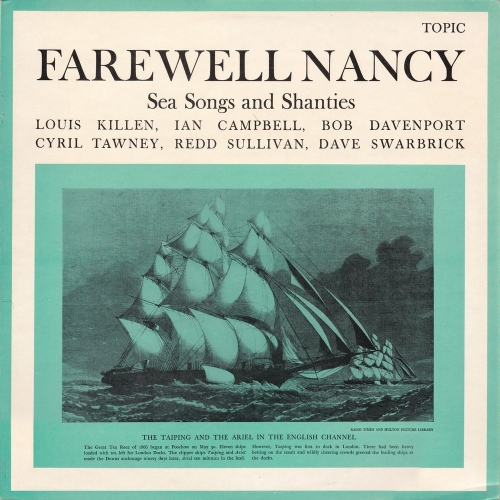
Louis Killen, Ian Campbell,
Bob Davenport, Cyril Tawney, Redd Sullivan, Dave Swabrick, Farewell Nancy,
LP UK Transatlantic 1964 - 12T110
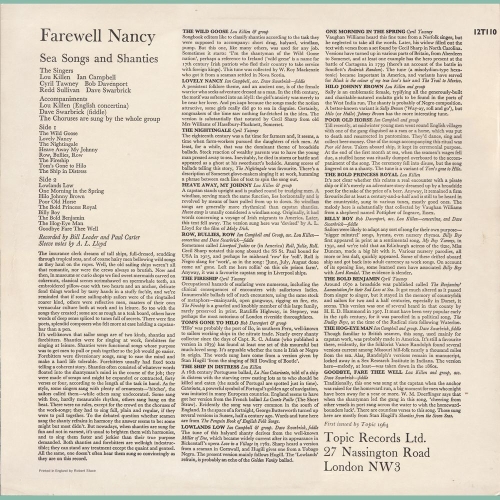
It's
well-known that sailor songs are of two kinds, shanties and
forebitters. Shanties were for singing at work, forebitters for singing
at leisure. Shanties were functional songs whose purpose was to get men
to pull or push together so the job would go easier. Forebitters were
diversionary songs, sung to ease the mind and make a hard life
tolerable. Forebitters usually had fixed texts telling a coherent
story. Shanties often consisted of whatever words floated into the
shantyman's mind in the course of the job; they were made of scraps and
might be expanded or contracted, forty verses or four, according to the
length of the task in hand. As for style, some singers sang with plenty
of ornaments—‘hitches', the sailors called them—while
others sang undecorated. Some sang with free, hardly measurable rhythm,
others sang bang on the beat. There were no rules, except for the crowd
on the choruses of the work-songs; they had to sing full, plain and
regular, if they were to pull together. To the debated question whether
seamen sang the shanty refrains in harmony the answer seems to be: some
might but most didn't. But nowadays, when shanties are sung for fun and
not in earnest, it's usual to brighten them with harmonies, and to sing
them faster and jerkier than their true purpose demanded. Both shanties
and forebitters are wellnigh indestructible; they can stand any
treatment except the quaint and genteel. All the same, one doesn't
often hear them sung so convincingly as they are on this record.
Recorded by Bill Leader and Paul Carter. Sleeve notes by A. L. Lloyd.
È risaputo che le canzoni dei marinai si dividono in due
categorie: shanties e forebitters. Le shanties venivano
intonate durante il lavoro, le forebitters nei momenti di svago.
Le shanties erano canti funzionali, pensati per coordinare gli
sforzi degli uomini – nel tirare o spingere – e rendere
così il lavoro meno gravoso. Le forebitters erano invece
brani d'intrattenimento, eseguiti per distrarre la mente e rendere
più sopportabile una vita dura. Queste ultime presentavano
solitamente testi fissi che narravano una storia coerente.
Le shanties, al contrario, erano spesso composte da parole che
venivano in mente a chi le intonava (shantyman) proprio mentre il
lavoro procedeva; erano un insieme di frammenti, che potevano essere
ampliati o ridotti – da quattro a quaranta strofe – a
seconda della durata dell'operazione da svolgere. Quanto allo stile,
alcuni cantanti arricchivano l'esecuzione con numerosi abbellimenti
– chiamati dai marinai hitches – mentre altri
cantavano in modo essenziale, senza fronzoli. Alcuni adottavano un
ritmo libero, quasi impossibile da misurare, altri procedevano con una
cadenza rigorosamente a tempo. Non esistevano regole precise, fatta
eccezione per il coro nelle canzoni da lavoro: qui tutti dovevano
cantare in modo pieno, semplice e regolare, per garantire che lo sforzo
fosse coordinato. Riguardo all'annosa questione se i marinai
eseguissero i ritornelli delle shanties in armonia, la risposta
parrebbe essere: alcuni forse lo facevano, ma la maggior parte no.
Oggi, tuttavia, dato che le shanties vengono cantate per puro
divertimento e non più per necessità lavorativa, è
consuetudine arricchirle con armonie, eseguendole inoltre con un ritmo
più rapido e spezzato rispetto a quanto la loro funzione
originale avrebbe richiesto. Sia le shanties che
le forebitters sono pressoché indistruttibili: resistono a
qualsiasi trattamento, a patto che non vengano rese eccessivamente
leziose o raffinate. Ciononostante, è raro ascoltarle eseguite
con una tale convinzione come in questo disco. Registrato da Bill
Leader e Paul Carter. Note di copertina a cura di A. L. Lloyd.
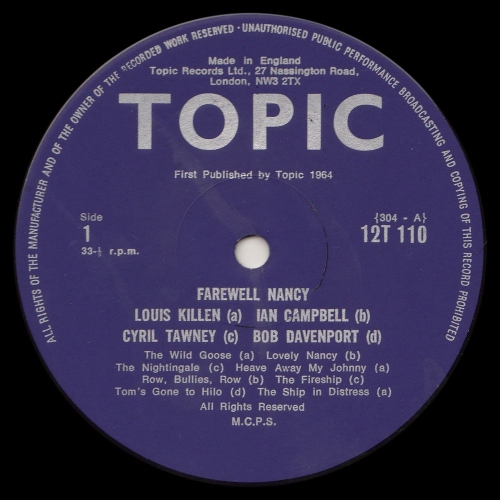
Tracks Side 1:
Side One
The Wild Goose
Lovely Nancy
The Nightingale
Heave Away My Johnny
Row, Bullies, Row
The Fireship
Tom's Gone to Hilo
The Ship in Distress
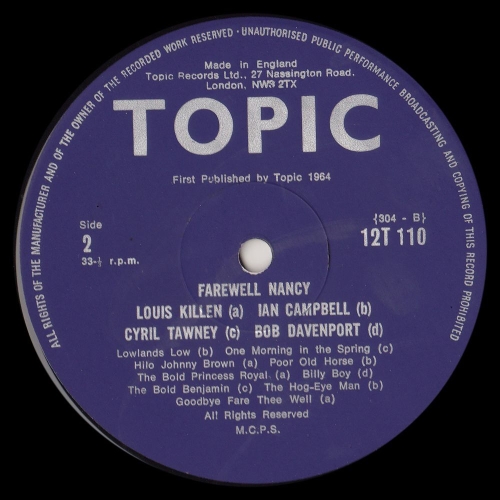
- Tracks Side Two:
Lowlands Low
One Morning in the Spring
Hilo Johnny Brown
Poor Old Horse
The Bold Princess Royal
Billy Boy
The Bold Benjamin
The Hog-Eye Man
Goodbye Fare Thee Well
Musicians: Lou Killen: Vocals & English Concertina,
Ian Campbell: Vocals,
Cyril Tawney: Vocals,
Bob Davenport: Vocals,
Redd Sullivan: Vocals,
Dave Swarbrick: Vocals & Fiddle..
|